


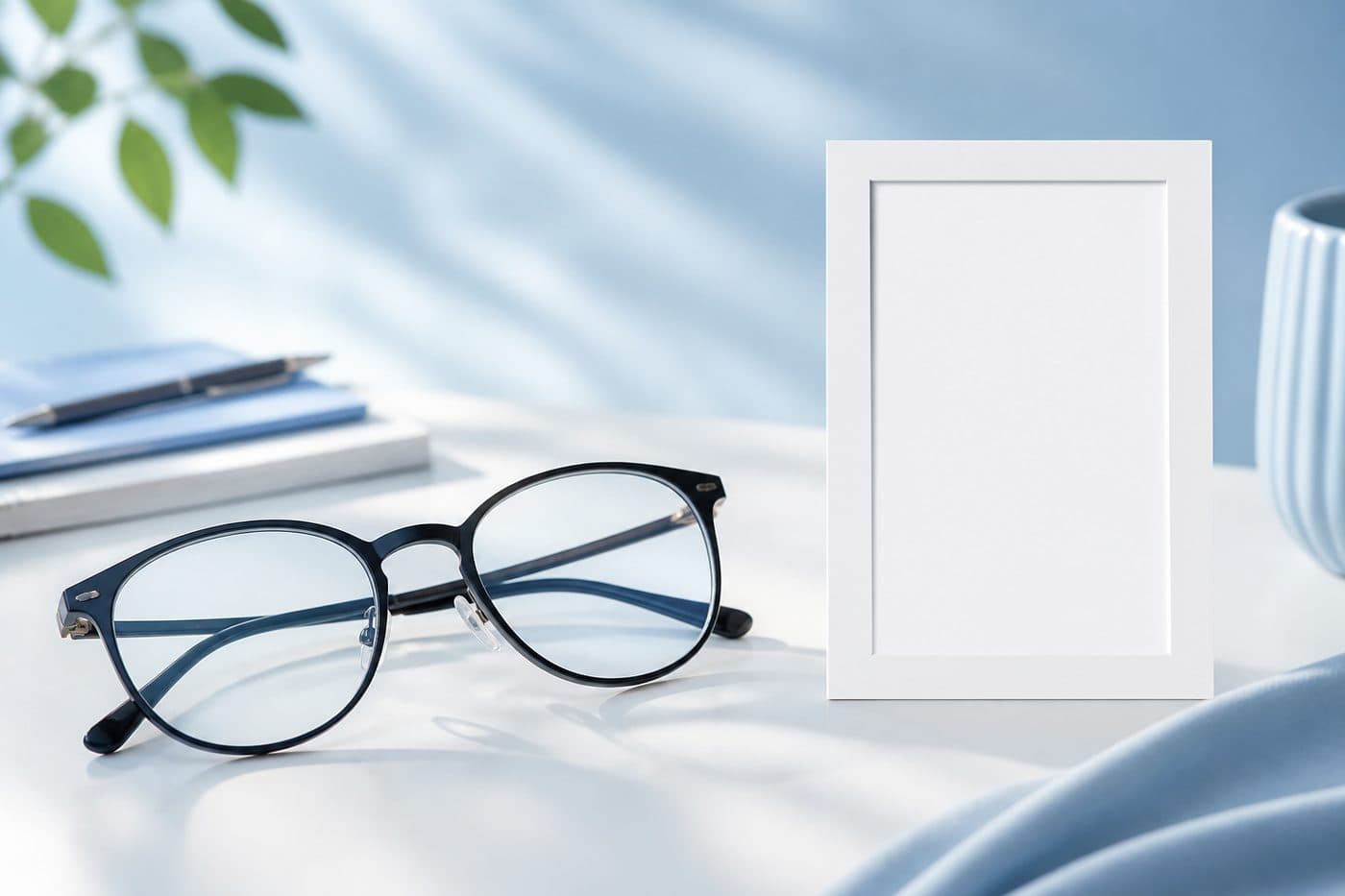
Are glasses allowed in a biometric photo?
Lens glare, frame thickness and prescription glasses: clear rules for the US, Schengen and Türkiye.
Short answer
The safest choice on most documents is to take the glasses off. Prescription lenses are allowed in some countries; sunglasses, tinted lenses and flash glare on the glass are a refusal almost everywhere.
Use our AI-powered India Passport Photo Tool to auto-crop your image in 3 seconds.
Checkers look at three things: are both eyes fully visible, is there glare on the lenses, do the frames cut the eyebrows or eyelids. When unsure, shoot without glasses — clear contact lenses are usually fine.
Official photo requirements
- Document size applied
- Face alignment checked
- Background prepared
Size
35 × 35 mm
Background
White
Digital photo
413 × 413 px


Glare on the lenses
Biometric scanners read the eye corners, iris and pupil position. Even a small white patch on the glass covers those landmarks; what looks like a mild highlight to you is a fail code in software.
Do not use flash. Keep the phone at eye level and use window light from the front or side. A slight head tilt can shift the reflection, but the gaze must stay on the camera. Zoom 100% on both lenses after the shot — one flare on either side is enough to fail.
Frame thickness
Thick, cat-eye or oversized frames cut the eyebrow, upper lid or outer eye corner. In the ICAO face template that zone is the “eye box”; if the frame enters it, the automated check fails.
Thin metal or thin plastic frames are lower risk, but they still must not cover the top or bottom of the eye. The frame must not sit over the iris. If you only have a heavy prescription frame, removing the glasses is almost always better.
Prescription glasses, tint, contacts
Clear prescription lenses: some Schengen consulates and Türkiye may accept them if there is no glare and both eyes are open. Photochromic lenses darken outdoors — they are banned in a biometric shot.
Sunglasses and mirrored lenses fail every document. Tinted or novelty contacts change iris size; clear contacts are fine, coloured ones usually are not. US passport and DS-160 have banned glasses since 2016; a rare medical exception needs a signed statement.
Rules by country
Türkiye: Clear prescription lenses are usually accepted if they do not cover the eyes and there is no glare. No sunglasses. US passport / visa: No glasses. The only exception is when they cannot be removed for medical reasons (e.g. recent eye surgery) with a clinician’s letter — and even then frames must not cut the eyes and lenses must have no glare.
Schengen / EU visa: Some checklists still say prescription glasses are allowed; France, Germany and the Netherlands in practice prefer them off. Italy and Spain are more tolerant of glare-free prescription lenses. United Kingdom: Since 2016, remove them for new applications unless there is a medical reason. Confirm the rule on your document page.
Get a clean shot with FotoPass
Take the glasses off and upload a sharp selfie — that cuts glare and thick-frame refusals from the start. FotoPass crops the face to the document’s head ratio; you do not need an oval overlay or studio lights.
If glasses are medically required: thin frames, window light, no flash, both lenses glare-free. Pick the passport or visa in the document selector; US documents expect a glasses-free frame.